
Industry
Home pottery studio rules, OSHA silica dust and firing logs
A home pottery guide to studio rules, OSHA silica dust, reclaim habits and firing logs, with lessons that keep clay work safe and repeatable.
No makers were interviewed for this article. What follows is inferred from the rules that working studios write down, because a written rule is usually the scar left by something that went wrong.
What to take away
- Fired clay must never go into a reclaim bucket. It contaminates everything downstream.
- Cleaning is a shared duty in every published studio rule, which tells you how quickly it fails.
- The dust in a ceramics room is the same material that regulators write standards about.
- A firing log is the only way to explain a result weeks later.
The rules studios write down
One art school's ceramics shop rules read like a list of things that have gone wrong before. Wet wipe and clean every surface and workstation used, including the wedging and glazing stations. Check the floor for liquid and dust, once when finished at that station and again before leaving. Do not pour clay or glaze into the sink.
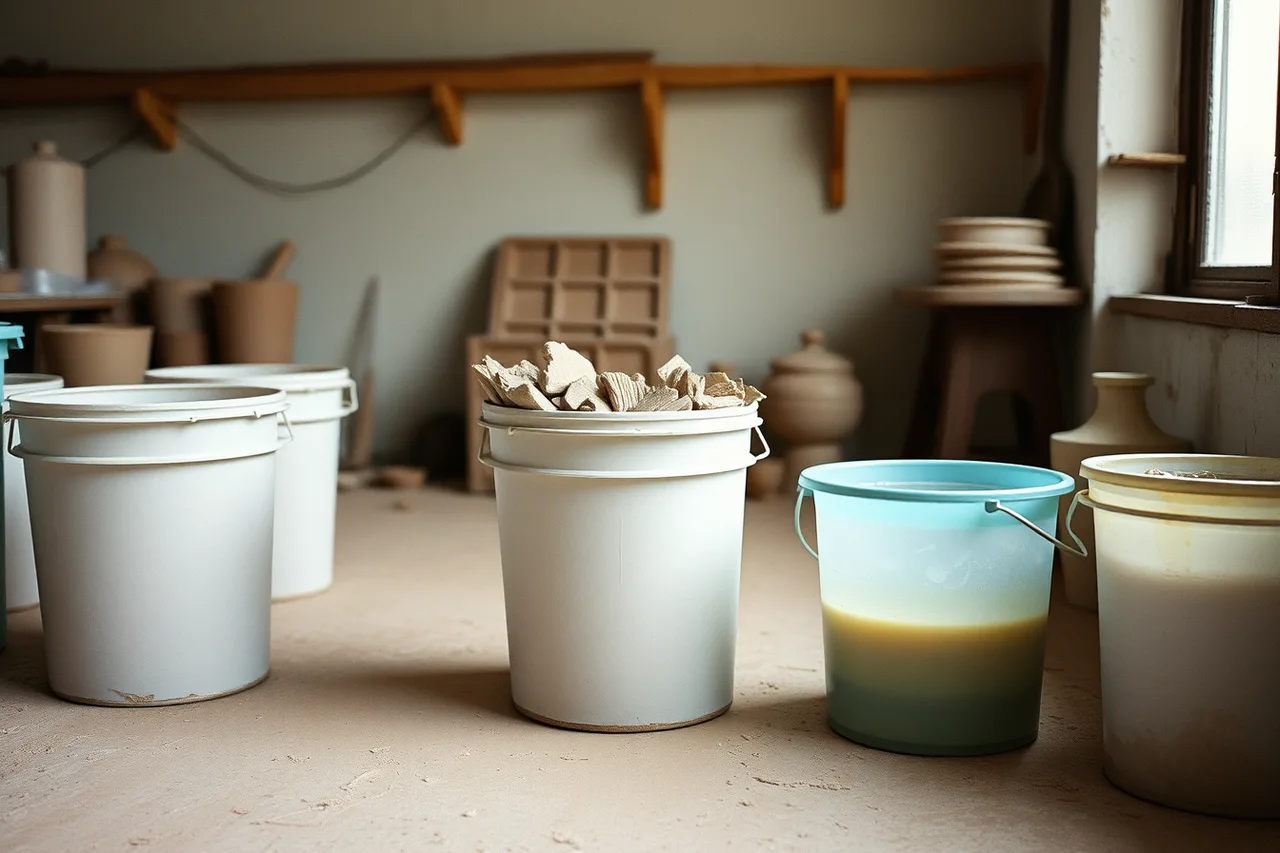
Recycle unfired, uncontaminated clay in the recycling buckets, and never put fired clay in the recycling system, because it contaminates all the clay and endangers others who wedge.
Storage shelves are renewed weekly and hold active work only. Clean and return tools and leave nothing on a workstation if you step away for more than a short break.
Every one of those transfers to a home studio. The fired-clay rule is the one beginners break, usually by dropping a broken bisque piece into the slop bucket.
Why the dust rule keeps appearing
Because regulators count ceramics as a silica exposure. OSHA's fact sheet on the general industry silica standard names the manufacture of glass, pottery, ceramic, brick, concrete, jewelry, dental and porcelain products among the ways workers get exposed. It sets a permissible exposure limit of 50 micrograms per cubic meter over an eight-hour day and an action level of 25.
The standard requires dust controls and safer work methods rather than respirators as the first response. It restricts housekeeping that raises dust, including dry sweeping and compressed air without capture. Workers exposed at or above the action level for 30 or more days a year must get chest X-rays and lung function tests every three years.
A home potter is not covered by any of that. The reason to read it is that the same word, pottery, appears in a document about an incurable lung disease.
Things that get learned expensively
| Lesson | The cheap version |
|---|---|
| A piece that was not bone dry destroys its neighbors | Wait an extra day; weigh it if unsure |
| Glaze on a foot welds a pot to the shelf | Dry foot everything, always |
| One low-fire piece in a high firing wrecks a shelf | Run one clay body |
| Elements age and the kiln quietly underfires | Cones in every firing, not just new ones |
| A firing with no log cannot be repeated | Write it down before you start |
Keep the log even when nothing is wrong
The firing log's value is not in the failed firing. It is in the twenty that worked, your comparison against failure.
Record the schedule, cone set, bent cone, each test's location, load size, and results. That habit joins the installation decisions and single-question test firings that turn a kiln from mystery into equipment.
Common questions
Why can fired clay not be reclaimed?
Because it no longer softens in water. It stays as hard grit in the reclaim, and it will cut hands during wedging and blow holes in pots during firing.
Is a shop vacuum acceptable for kiln shelf debris?
Only with a HEPA filter. Otherwise it passes the finest particles through the exhaust and into the room you are standing in.
How often do elements need replacing?
It depends on how hot and how often you fire. The signal is not age but a firing that takes noticeably longer to reach the same cone.
Should I keep the log on paper or a phone?
Whichever you will actually do at the kiln with dirty hands. Paper taped to the wall beats an app you open later.