Reviews
Part of Choosing a beginner pottery wheel: 6 features to check
Beginner pottery wheels storage: a dry, dust-free routine
Beginner pottery wheels storage, from lidded slip buckets to bat stacking and an end-of-session cleanup that keeps clay dust out of your home studio.
The area around a wheel accumulates faster than anywhere else in a studio. Beginner pottery wheels storage is mostly a fight for space: wet clay, trimmings, slip, bats, tools, water buckets and a stool all competing for the same two square meters, and the failure mode is that something dries out and becomes airborne.
What to take away
- Everything within reach of the wheel should be lidded, wet, or on its way to being cleaned.
- Trimmings and slip go in a bucket with water, immediately, not on the floor.
- Clean the splash pan, wheel head, work surface, floor and stool every session.
- Never let clay go down a household drain. Use a settling bucket or a trap.
Copy how a shared studio arranges it
Shared studios solve this daily, and their published ceramics studio policies are worth copying whole.
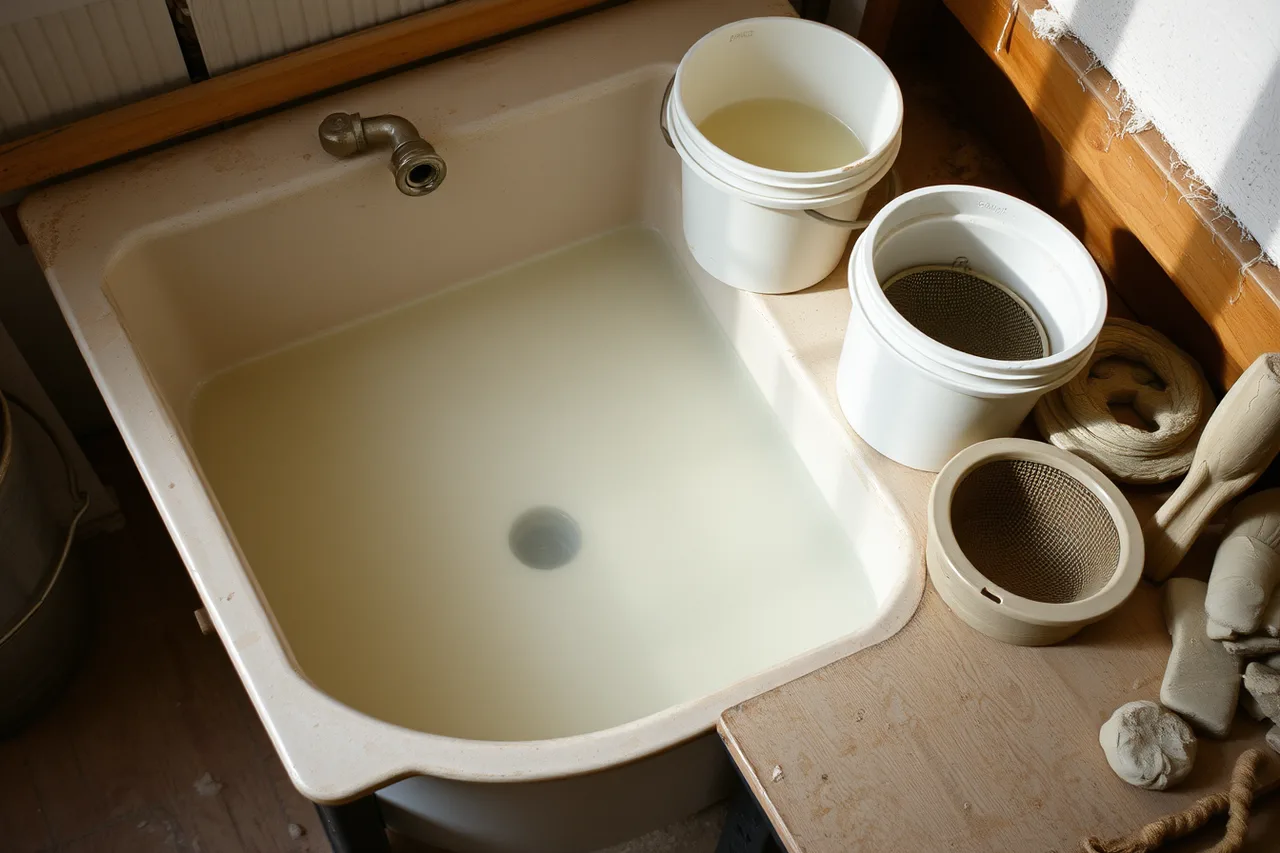
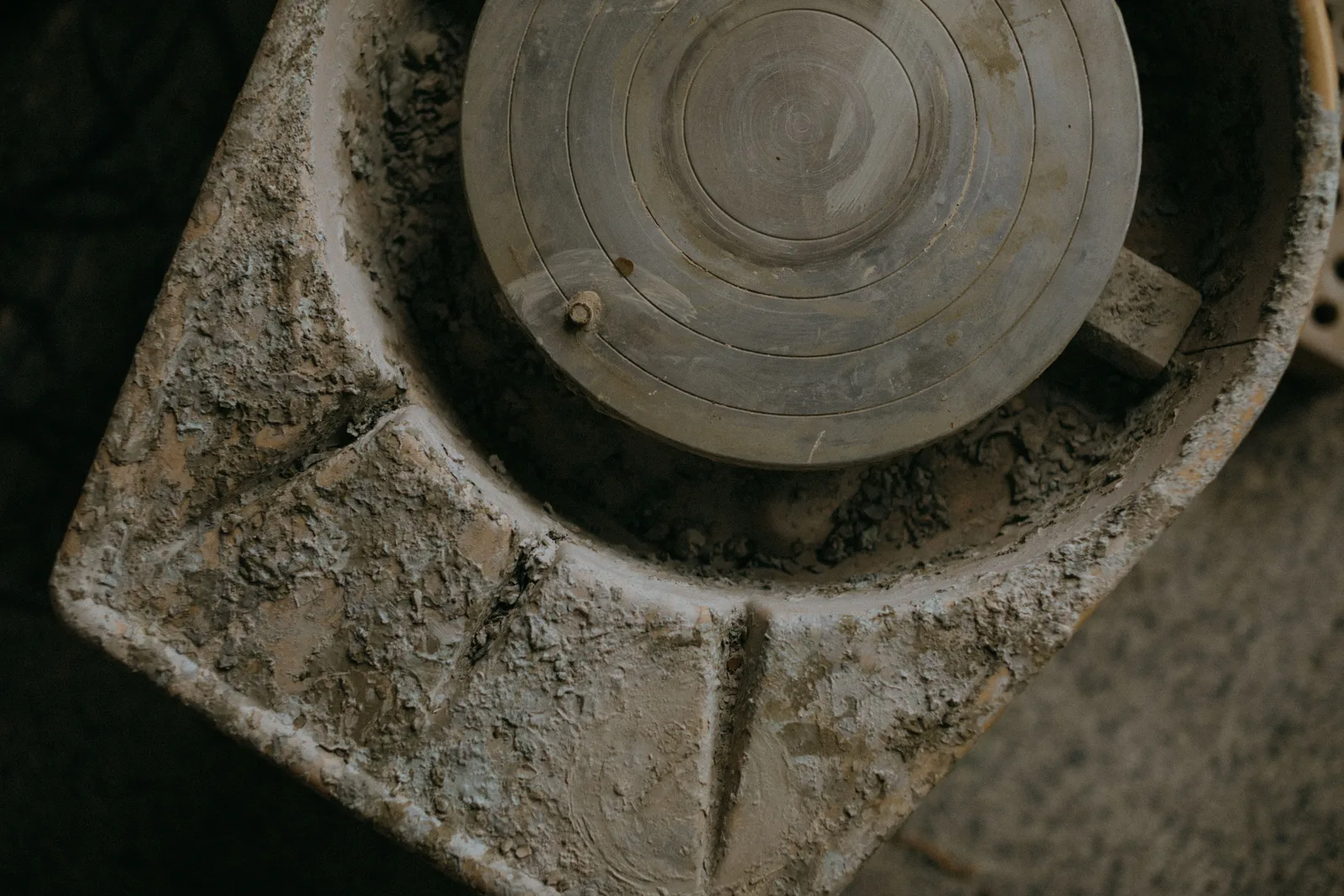
Wheels are left clean: splash pan, work surface, wheel head, floor and stool, with the control off and the stool upside down on the head. Trimmings go into slip buckets with a little water to help the clay slake. Anything else, failed pots included, is reconditioned by drying 15 to 20 minutes and re-wedging, then returned to the clay barrel.
A settling sink drains slowly from the top so sediment settles, backed by a clay trap with two screen sizes. Buckets and tools are washed in the sink water rather than under a running faucet.
The clay is white and brown cone 6 stoneware at 12 percent shrinkage, deliberately compatible so both take the same cone 6 glazes, which mature at 2232 degrees Fahrenheit, with a fired test tile on every glaze bucket.
The home version
| Item | Where it lives | Rule |
|---|---|---|
| Bagged clay | Lidded bin, off the floor | Double bagged once opened |
| Trimmings and slip | Lidded bucket at the wheel | Water added, never allowed to dry |
| Clean water | Second bucket, within reach | Changed when it goes gray |
| Bats | Rack or shelf, cleaned and dry | Scraped before stacking |
| Hand tools | Tray or jar, washed each session | Not left in the splash pan |
| Stool | Upside down on the head at the end | Signals the wheel is off and clean |
The end-of-session routine
End-of-session routine
- Trimmings and slop into the lidded bucket, with water.
- Splash pan off, washed, back on.
- Wheel head, work surface and stool wiped with a wet sponge.
- Stool upside down on the head so the wheel reads as finished.
Why the dust rules govern the layout
Storage near a wheel is a dust decision before it is a tidiness decision. Respirable crystalline silica is a hazard to about 2.3 million workers in the United States, according to the Occupational Safety and Health Administration (OSHA), which regulates it under its respirable crystalline silica standard for general industry, 29 CFR 1910.1053. The disease it causes, silicosis, is incurable and can lead to disability and death, alongside lung cancer, chronic obstructive pulmonary disease and kidney disease.
Home potters are not those workers and the exposures differ in scale. The point is that the material is the same and the disease has no treatment, which is why lidded buckets and wet cleaning are worth keeping at any scale. That thinking should shape what you buy and where you try a wheel.
Common questions
Can I keep reclaim in an open bucket?
Only if it stays wet. Once the surface dries and cracks it becomes a dust source. A lid solves that for a few dollars.
How often should the splash pan come off?
Every session. It is the single dirtiest part of the wheel and the easiest to clean while the clay is still soft.
Do I need a clay trap on my sink?
If clay water goes down that drain, yes. Otherwise use a settling bucket, let the sediment drop, pour off the clear water and reclaim the rest.
What is the right way to store bats?
Scraped clean and dry, stacked with nothing warping them. Plaster bats should never be stacked while damp.