Industry
Part of Best pottery tools for 2027: a ranked shortlist
Grip and posture at the wheel: what decides how long pottery tools last
Pottery tools expert tips: the tool lesson nobody teaches beginners is ergonomic, grip, wrist posture and break intervals decide whether you are still making pots.
No makers were interviewed here; what is documented, and almost never said in pottery advice, is that grip and posture at the wheel decide how long your hands last. The material of a tool decides how long the tool lasts. This article covers both: hand longevity and tool lifespan. A dull rib makes you push harder.
What to take away
- Keep the wrist straight. Almost every pottery injury starts with a bent one.
- Grip a tool with a curved hand, not with straight fingers pinching.
- Take frequent short breaks rather than occasional long ones.
- Alternate tasks. Repetition is the risk factor, not effort.
- Material sets tool lifespanwood swells, steel rusts, carbide keeps its edge.
- Grog and sand in the clay body grind edges faster than smooth porcelain does.
Grip and posture, specifically
Occupational ergonomics guidance is concrete about hands. The source is OSHA, the Occupational Safety and Health Administration, in its electrical contractors eTool, Solutions for tasks: hand. Check that page for its current revision before quoting the figures.
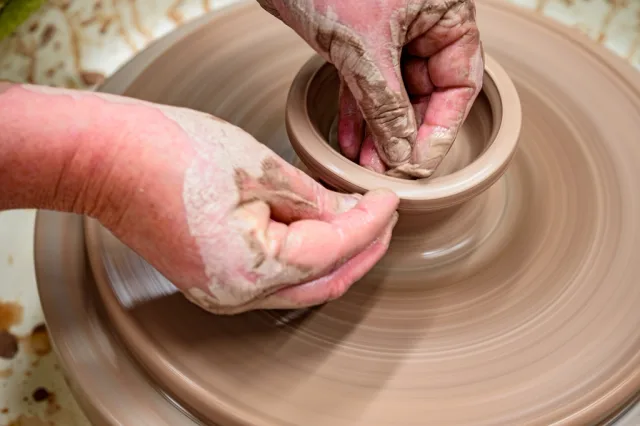
It recommends a C-shaped hand posture when grasping tools, with the hand forming a natural curve. It warns against pinch grips that keep fingers relatively straight while exerting force, because those weak postures require excessive force.
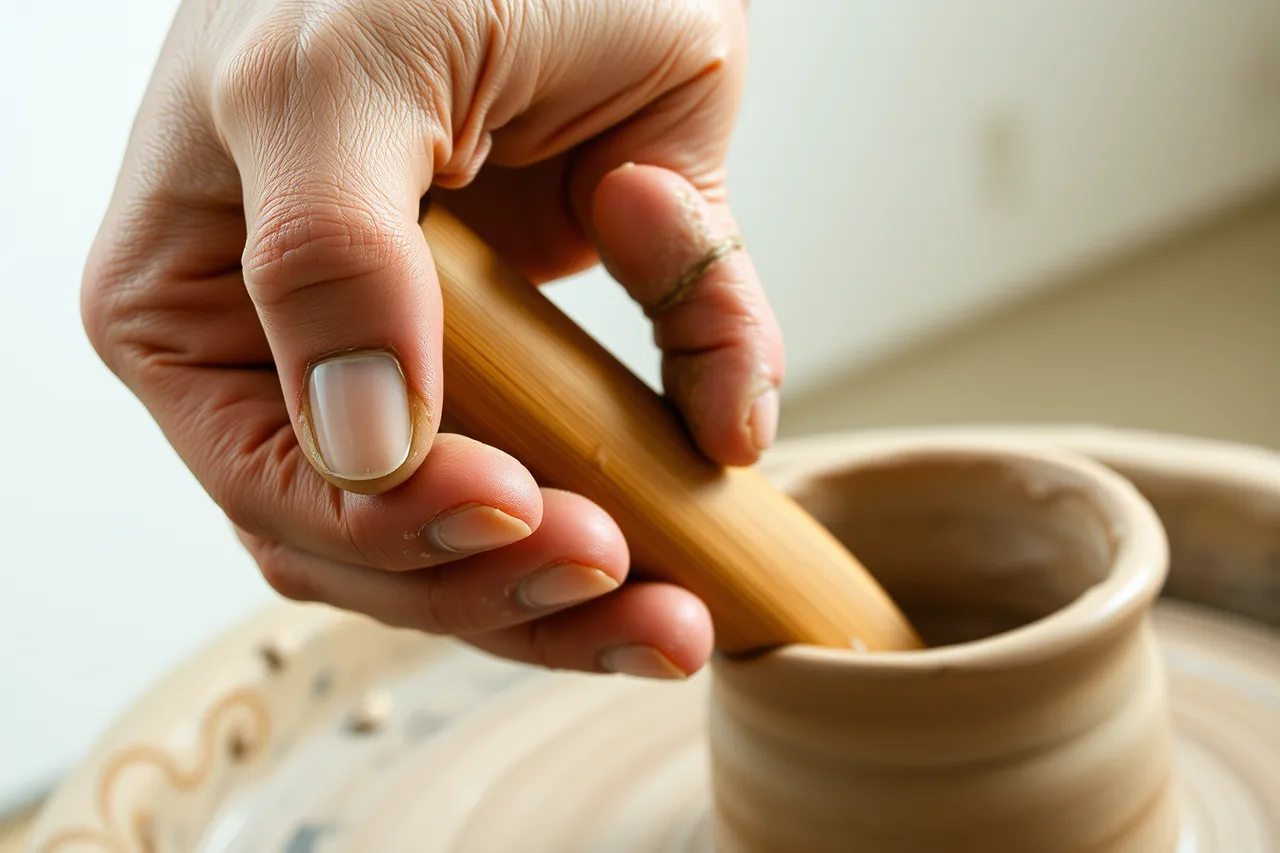
Handles should be long enough to span the entire hand, padded to remove sharp edges, and sized to the hand, so contact pressure is spread.
The same guidance says to keep the wrist as straight as possible during finger-intensive tasks. Take frequent short breaks instead of less frequent long ones, and alternate highly repetitive tasks with tasks that are not. Use trigger levers rather than single-point triggers so force spreads across several fingers.
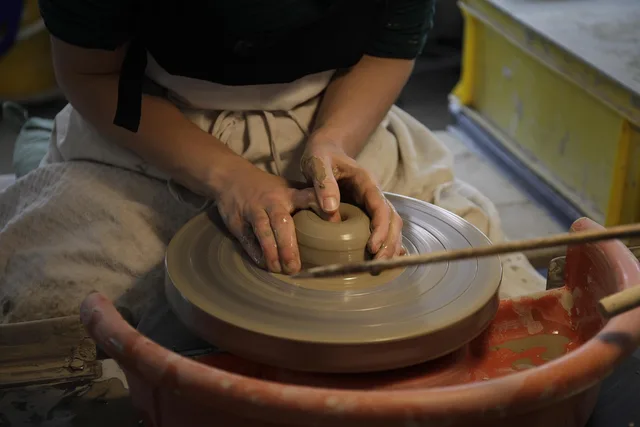
Translate that to pottery and the changes are small. Hold a rib in a curved hand rather than pinched between fingertips. Raise the work so your wrist is not cocked. Alternate throwing with trimming, glazing or cleaning rather than doing four hours of one thing.
Tool materials and how they wear
Tool lifespan is a materials question. A wooden rib, a steel needle, a carbide blade and a polymer rib behave differently in the same bucket of slip.
- Wooden ribs and boxwood modeling tools, typically $3 to $10, warp and split when they soak.
- Polymer ribs like the Mudtools Shapes, typically $8 to $15, are color-coded by flexibility and ignore water.
- Steel ribbon and needle tools from Kemper Tools, typically $5 to $12 each, rust and bend rather than wear down.
- Tungsten carbide trimming tools from Dolan Tools, typically $30 to $50, hold an edge for years and chip if dropped.
- Titanium-coated trim tools such as the Xiem Tools Titanium line, typically $20 to $40, shed clay and resist corrosion.
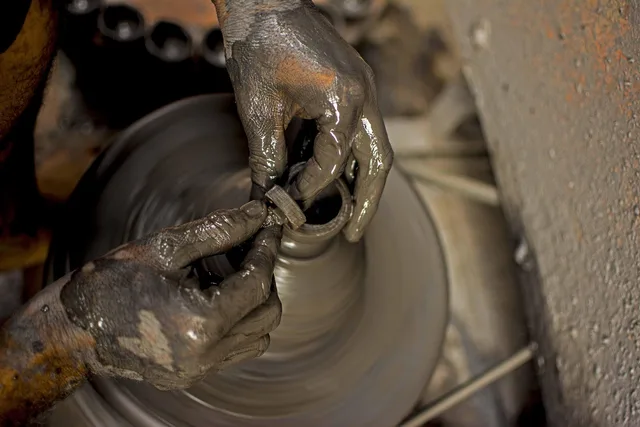
Water is the second factor. Wood handles swell in the throwing bucket, crack along the grain, and loosen the ferrule that holds the blade. Steel needles and ribbon blades rust overnight when left in slip. Wipe tools dry at the end of a session and store them out of water.
The clay body is the third. Grog and sand are abrasives, so grogged stoneware dulls a trimming tool faster than smooth porcelain does. Wire cutters wear differently: the wire snaps long before the frame gives out, and replacement wire costs a few dollars against $10 to $20 for a new tool.
Edges can be brought back with a fine diamond file, typically $10 to $25, good for two or three sharpenings on a steel or carbide blade. Ribs cannot be sharpened. They thin, then crack, so store them apart in a roll rather than loose in a jar.
Break intervals that are actually specified
Federal occupational health guidance gives numbers for comparable repetitive laboratory work. The source is the NIH Office of Research Services, Division of Occupational Health and Safety, in its pipetting ergonomics guidance. Check the page for its current revision. It sets micro-breaks of 2 minutes for every 20 minutes of pipetting.
It specifies forearms parallel to the floor at roughly a 90 degree elbow angle, a neutral spine, and straight wrists with no bending or rotating. Chairs adjust in height between 28 and 33 inches. Job rotation means more than one person performs a repetitive task.
The same guidance flags hand-arm vibration from vibrating tools as a contributor to Raynaud's syndrome, with numbness and blanching of fingertips. Pipetting is not throwing, but the structure of the exposure is the same: small repeated forces, held postures, hours at a time.
For pottery, two minutes off every twenty minutes is the recommended practice at the wheel.
What that means at the wheel and the bench
| Habit | Change |
|---|---|
| Wheel too low | Raise it so your forearms are near horizontal |
| Long unbroken sessions | Two minutes off every twenty, deliberately |
| Pinching ribs and needles | Curved grip, whole hand |
| One task all day | Rotate throwing, trimming, glazing, cleaning |
| Cold hands in a cold studio | Warm the room; cold hands grip harder |
| Ribs and needles loose in a jar | A roll or tray keeps edges from nicking |
The tools that help
A tool with a longer, padded handle, a banding wheel so the piece turns instead of your wrist, and a seat at the right height do more for longevity than any upgrade in tool quality. Fit that into the tool judgments you make when buying, and into the project sequence so that no single session is all one motion.
A Giffin Grip centering tool, typically $250 to $350, holds a pot on the wheel head while you trim. A banding wheel, typically $40 to $120, does the same job for decorating.
Common questions
Is wrist pain from throwing normal?
Common, not normal. Persistent pain is a signal to change the setup or the schedule, and to see a clinician rather than to push through.
Does a higher wheel seat help?
Usually it is the wheel that is too low rather than the seat too high. What matters is the relationship between the two and where your forearms end up.
Are ergonomic pottery tools worth buying?
A tool is only ergonomic if it fits your hand and the task. Handle length and grip diameter are what matter, and both can be judged by holding one.
How long do pottery tools last?
It depends on the material and the clay. A steel needle tool can rust out within a year of wet storage, while a carbide trimming tool holds its edge for several years. Polymer ribs outlast wooden ones.
How long should a session be?
Long enough to get into the work, short enough that technique does not degrade. For most people that is two to three hours with breaks, not a whole day.