Industry
Part of Ceramics projects sized for one kiln shelf, chosen to build skill fast
Small ceramics projects expert tips: recycle clay, control dust
Small ceramics projects expert tips for home studios: recycle clay properly, run one clay body, and control silica dust with wet methods and simple habits.
The best small ceramics projects expert tips are not project ideas. They are studio habits: one clay body, disciplined reclaim, and dust control. This article sticks to practices that hold up in a home studio.
What to take away
- Run one clay body. Mixing bodies in one studio causes firing failures and contaminates reclaim.
- Recycle scrap at every stage except fired. It is the cheapest clay you will ever have.
- Wet clay scrap traps air when combined, so wedge before you use it.
- The dust rules are not optional at small scale. Small work still makes dry trimmings.
Recycle, but do it properly
Recycling clay has firm rules. Scrap appears at every stage of making, and all of it except fired ware can go back. Combining wet scrap traps air inside, which causes blow-outs during firing, so wedging is not optional.
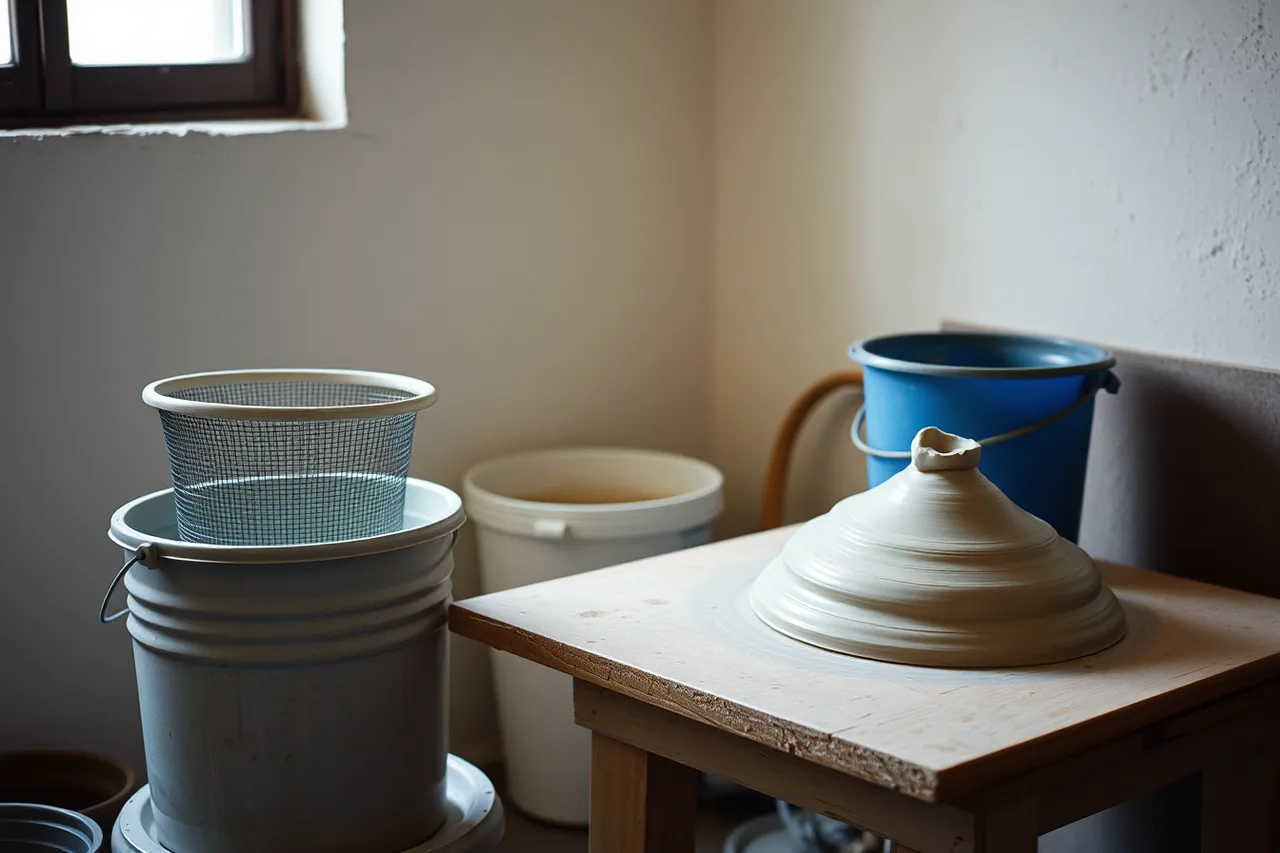
Slip should be sponged up during cleaning and collected in buckets, then poured through a wire screen so tools do not end up in the mixer. Water can be drawn off the top of a settled slip bucket with a baster or a sponge. A few drops of bleach discourage the mold that develops if it sits too long.
Open studios standardize on one clay body for a reason: high-fire and low-fire clays, or white and red bodies, produce unwanted results when they mix. If you do run two, keep separate wash buckets, separate slip buckets, separate plaster slabs, and clean the wheel tray between them.
One body, one glaze, one cone
Small projects tempt you to try everything, because each piece is cheap. Resist it for the first year. Pick one commercial clay body, such as Laguna B-Mix, and one glaze line, such as Amaco, and stay with them. Holding the clay body, the glaze and the firing temperature constant is what makes a result interpretable. It also means your reclaim bucket stays usable, which is the practical version of the same rule.
Dust does not scale down
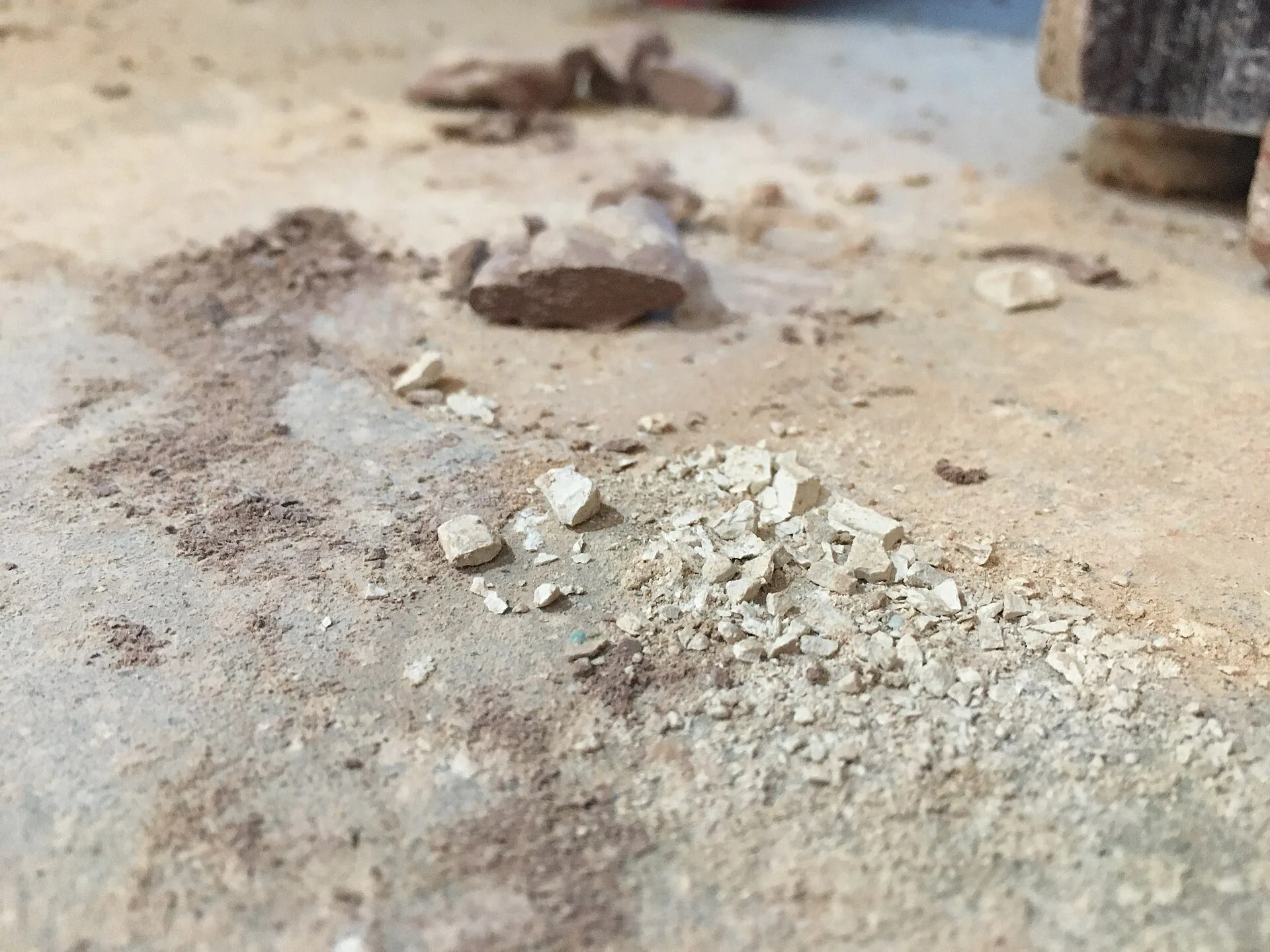
Small work produces less clay, not less dust. Trimming a dozen small pots yields as much dry trimming as three large ones, and it lands on the floor.
Ceramic clays contain crystalline silica, and some glazes contain toxic metals such as cadmium and barium. Ceramic safety guidance recommends ordering wet clay, not dry, working in well-ventilated areas, and choosing cadmium-free and barium-free glazes when possible. In the U.S., OSHA's respirable crystalline silica standard sets a workplace exposure limit, and NIOSH recommends even stricter controls; treat those as the benchmark for a home studio.
- Sponge the table before the trimmings dry, every session.
- Keep the reclaim bucket at the wheel, not across the room.
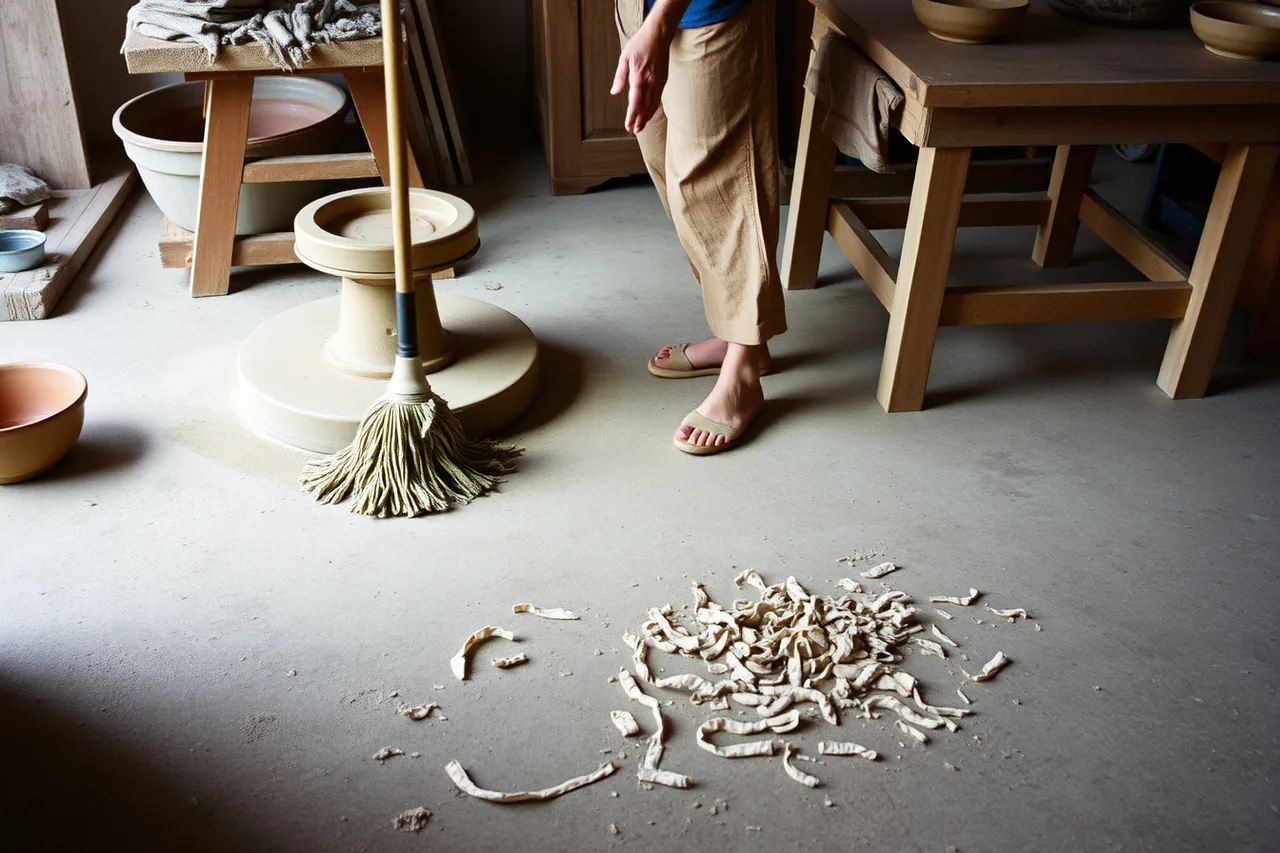
- Wet-mop the floor rather than sweeping it, or use a HEPA vacuum.
- Choose wet clay over powder whenever the supplier offers both.
- Wear a NIOSH-approved respirator when mixing dry clay, emptying a vacuum, or cleaning up dust; fit-check it each time.
- Vent the kiln outdoors with a downdraft kiln vent or an overhead hood, and never fire in a living space.
What small projects are actually good for
They are good for iteration, testing glaze thickness, using up reclaim, and filling gaps in a kiln load around a larger piece. They are not a shortcut past the slow parts of the craft.
Drying is still slow, firing is still slow, and a small bowl not bone dry will still break in the bisque.
Choose forms that let you repeat a decision, work through the project list by skill, and keep a single-variable discipline so that each firing tells you something.
Common questions
Can I mix two clay bodies if they fire to the same cone?
Sometimes, but not reliably. Shrinkage and glaze fit differ even between bodies with the same rated cone, and once they are in the same reclaim bucket you cannot undo it.
How long can I keep slip before recycling it?
A few weeks. After that it grows bacteria and smells strongly, which is a housekeeping problem rather than a technical one, but it also means the bucket has been sitting where it could dry and make dust.
Is reclaimed clay worse than new clay?
Not if it is wedged properly and kept free of plaster and other bodies. Many potters find reclaim slightly more plastic than fresh clay because it has aged.
Do I need to sieve reclaim?
Screening slip is worth it, mainly to catch tools, sponges and plaster chips. A plaster chip in your clay is the one contaminant that ruins finished pots.