Reviews
Part of Production studies and youth ceramics records agree on one habit: keep notes
A home pottery buying order built around keeping records
A home pottery buying order: clay, a way to fire, then a scale, notebook and cones, with Howard show rules and California 4-H showing why records come early.
If the goal is a home pottery practice you can learn from rather than a room full of equipment, the buying order changes. What comes first is whatever makes a result repeatable, and that is cheaper than the alternatives.
What to take away
- Buy the ability to record before the ability to make more.
- A scale, a notebook and a camera cost less than one hand tool set.
- Presentation gear comes last, and only when there is something to present.
- Exhibition rules will tell you what presentation actually requires.
The order
- Clay, enough to repeat a form, and a working surface.
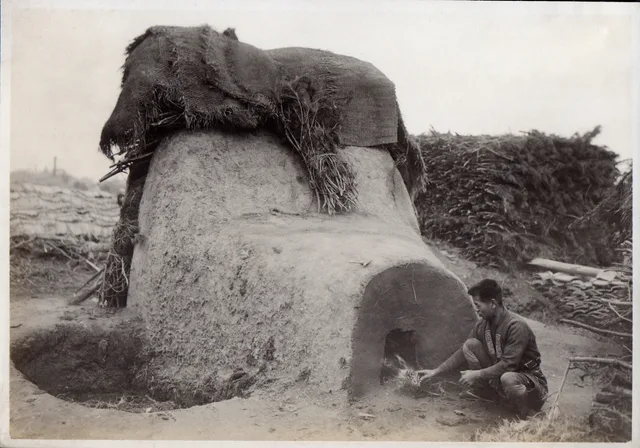
- A way to fire, whether that is a studio membership or a kiln. For a home kiln, start with a small top-loading electric model (like a Skutt or Paragon) requiring a dedicated 240-volt circuit, installed by a licensed electrician, and proper ventilation.
- A scale, a notebook and a phone camera. This is the record system.
- The basic hand tool kit, bought as the jobs demand it.
- Cleaning gearmop, bucket, sponges, lidded bins.
- A wheel, if the work needs one.
- Presentation and packing materials, last.
Step three is the one people skip and the one that changes everything. Without a weight, a cone and a photograph, a good result is an accident you cannot repeat. Use Orton cones (such as 06 or 6) to verify temperature, and weigh your clay to ensure consistency.
Why presentation gear comes last
Because you cannot know what you need until a venue tells you. Student show submission rules are specific and typical. Howard University's Chadwick A. Boseman College of Fine Arts, for its 89th annual student show, asks for two works per student, with at least one in the student's major, and requires exhibition labels completed and taped to the back of each work plus a registration form.
The same rules require everything to arrive exhibition-ready for judging. Oversized works must be flagged to gallery staff before submission. A juror will make a special off-site visit to the sculpture studio to judge large or complex assemblages too difficult to transport.
Every one of those is a logistics requirement rather than an artistic one, and none of them can be guessed. Read the rules, then buy the labels, the packing and the plinths.
Where documentation is built into the project
Structured programs treat recording as part of the work rather than an extra. The California 4-H project catalog, published by the University of California, says a 4-H project is summarized by some form of record keeping, and it describes arts and crafts projects including pottery and ceramics at beginner, intermediate and advanced levels, with the levels distinguished by the maker's experience rather than by different materials.
Documentation purchases and what they enable
Purchase
- Kitchen scale
- Repeating a form at same weight
- Notebook by kiln
- Explaining a result weeks later
- Phone and gray card
- Comparable photographs across months
- Cones
- Knowing what firing actually reached
- Labels and marker
- Test tiles that still mean something
What it makes possible
- Kitchen scale
- Notebook by kiln
- Phone and gray card
- Cones
- Labels and marker
The lesson for an adult beginner is that a level is defined by what you can reliably do, and reliability is only demonstrable if you wrote down what you did.
Purchase / What it makes possible
- Kitchen scale
- Repeating a form at the same clay weight
- Notebook by the kiln
- Explaining a result weeks later
- Phone and a gray card
- Comparable photographs across months
- Cones
- Knowing what the firing actually reached
- Labels and a marker
- Test tiles that still mean something later
Then everything else
Once those exist, buy in the order the work demands. Equipment bought to solve a problem you have hit is almost always the right purchase; equipment bought to solve one you imagine is almost always the wrong one. The comparison between choices and the records you keep are what tell the difference.
Common questions
Is a notebook really a purchase worth listing?
It is the cheapest item on the list and the one with the largest effect. Treat it as equipment rather than stationery.
What camera do I need?
The one you already have, plus a gray card and a tripod mount. Consistency matters far more than the sensor.
Do I need a scale if I hand build?
Yes. Slab thickness and clay weight are what make a set of pieces match, and a scale is how you control the second one.
When should I buy packing materials?
When you have a date. Before that they take space and get used for something else.