Features
Part of Independent ceramic studios companies: a way to assess work
Beginner project: four questions for a studio visit
A beginner project for a studio visit: four questions to ask, why the last two matter most, what to bring, and how to turn one idea into a change at home.
A weekend spent visiting studios and looking at collections improves a home practice more than a weekend of throwing badly. That is the beginner project here: doing it deliberately, with questions prepared and notes taken.
What to take away
- Prepare four questions before you go, and write the answers down.
- Handle work where you are allowed to. Weight and balance do not photograph.
- Note firing method and cone for anything you admire.
- Turn the visit into one change in your own practice, not five.
Saturday: see the range
Spend the morning at a public collection and the afternoon at a working studio, and you are calibrating what is possible; formal programs describe that range plainly. Most private studios are not open to the public, so arrange the visit ahead by email or phone. Potters' guilds, regional arts councils, community-college ceramics programs and the notice board at a clay supplier are the usual ways to find one.
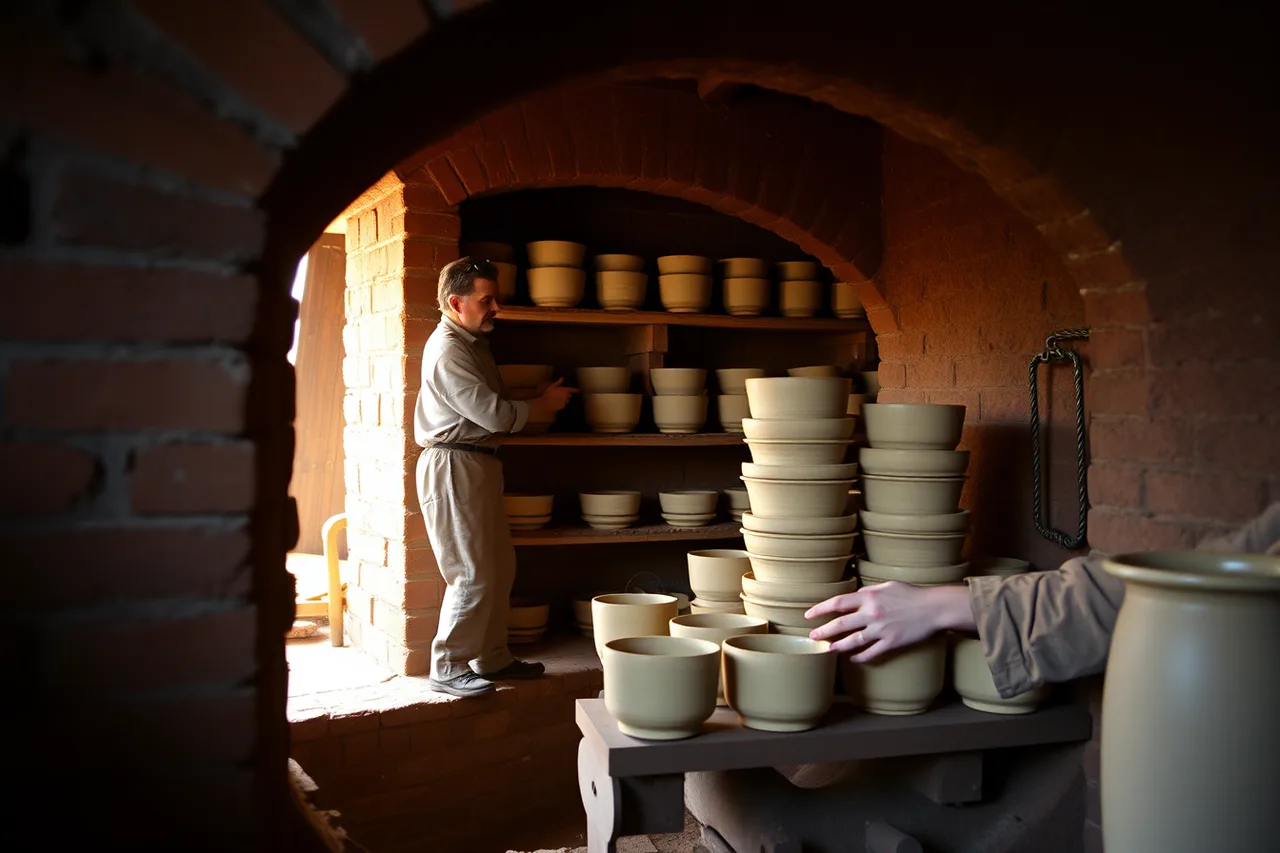
The ceramics studio art degree at the University of North Texas lists what it teaches: hand-forming, wheel-throwing and mold making, computer-aided design, and digital fabrication. It covers preparation of clay bodies and glazes, kiln stacking, and firing. Firing includes electric, gas, wood, raku, and both primitive and soda.
That list is a menu. Most home potters use one item from it. Seeing the others in person tells you which ones you actually want, and which you were only curious about.
The four questions
- What clay body and cone is this, and why that one?
- How was the surface made, and how many firings did it take?
- What failed in this batch, and why do you think it failed?
- What would you do differently if you had less equipment?
The third and fourth are the useful ones. Makers answer them generously and beginners never ask, because failure feels rude to bring up and constraint feels like an insult. Neither is. A potter who has worked around a small kiln or a single glaze has thought about it more carefully than anyone with unlimited equipment.
Sunday: convert it into a change
What you saw / The one change it suggests
- A surface you want
- Test that technique on six tiles, not on a pot
- A form you admire
- Make ten of them, same weight of clay each time
- A studio arrangement
- Move one thing in your own space
- A firing method
- Find out what it needs before wanting it
Pick exactly one. A weekend of inspiration that produces five new directions produces nothing, because none of them gets enough repetitions to teach you anything.
Write the change down before you go home, while the reason for it is still clear. By Wednesday the memory of why a particular foot looked right will have blurred into a general feeling that the work was good.
Why the professional version takes years
The ceramic art MFA at Alfred University is a two-year program accepting eight students a year. It requires two years of residence and at least sixty graduate credit hours.
Every student gets a private studio. Critical reviews come at midterm and the end of each semester. A written thesis supports a thesis exhibition.
Two years, full time, eight people. That is the cost of the work you admired on Saturday. Knowing it makes the comparison with your own progress a fair one, and it makes the access question clearer when you are choosing between a membership and a home setup, by showing you what to look for in the studios you visit.
Common questions
Is it rude to ask a maker about failures?
No, if you ask about the work rather than about them. Most potters enjoy the question, because failure is the part nobody else asks about.
What should I bring to a studio visit?
A notebook and clean hands. Ask before touching anything, and put your bag down away from the work.
Are open studio weekends worth traveling for?
Often, yes, because seeing several studios in a day makes the differences legible in a way one visit does not.
How do I keep the notes useful?
One page per studio, with the four answers, one photograph and one line saying what you will change. Anything longer will not be reread.