Industry
Independent ceramic studios companies: a way to assess work
Independent ceramic studios companies: assess work through collections, firing details, photos, and studio safety practices.
Independent ceramic studios companies are easy to find and hard to judge. This guide gives you the criteria — clay body, cone, glaze testing, firing frequency, dust control — and the named reference points, from the National Endowment for the Arts' participation survey to the Alfred Ceramic Art Museum, that separate a working studio from a well-photographed one.
What to take away
- The National Endowment for the Arts' survey of public participation puts adult pottery, ceramics and jewelry making at 4.4 percent, up from 3.6 percent in 2017.
- Museum and university collections, such as the Alfred Ceramic Art Museum, are free training in what good work looks like.
- A studio that will name its clay body and cone runs a real operation; one that only talks about aesthetics teaches you nothing.
- Residency directories like ResArtis and the Alliance of Artists Communities, and open studio events like the St. Croix Valley Pottery Tour, surface makers before galleries do.
- Ask four questions of any pot you admireclay, cone, glaze, food-safe or not.
How many people actually make pottery
The National Endowment for the Arts publishes the number. In its 2022 Survey of Public Participation in the Arts, 4.4 percent of adults reported making pottery, ceramics or jewelry.
Adults who make pottery
- 2012 4.1 percent
- 2017 3.6 percent
- 2022 4.4 percent
That is up from 3.6 percent in 2017 and 4.1 percent in 2012. The five-year rise is 0.3 percentage points, about 6 percent. The ten-year rise is 0.8 points, about 22 percent.
Two things follow. The activity is small, so your local scene is smaller than social media suggests. It is also growing, which is why studios and classes have become easier to find than they were a decade ago.
Learn the reference points first
Before you judge any studio, look at work that has already been judged. The Alfred Ceramic Art Museum at Alfred University publishes collections that show scale and range in one sitting.
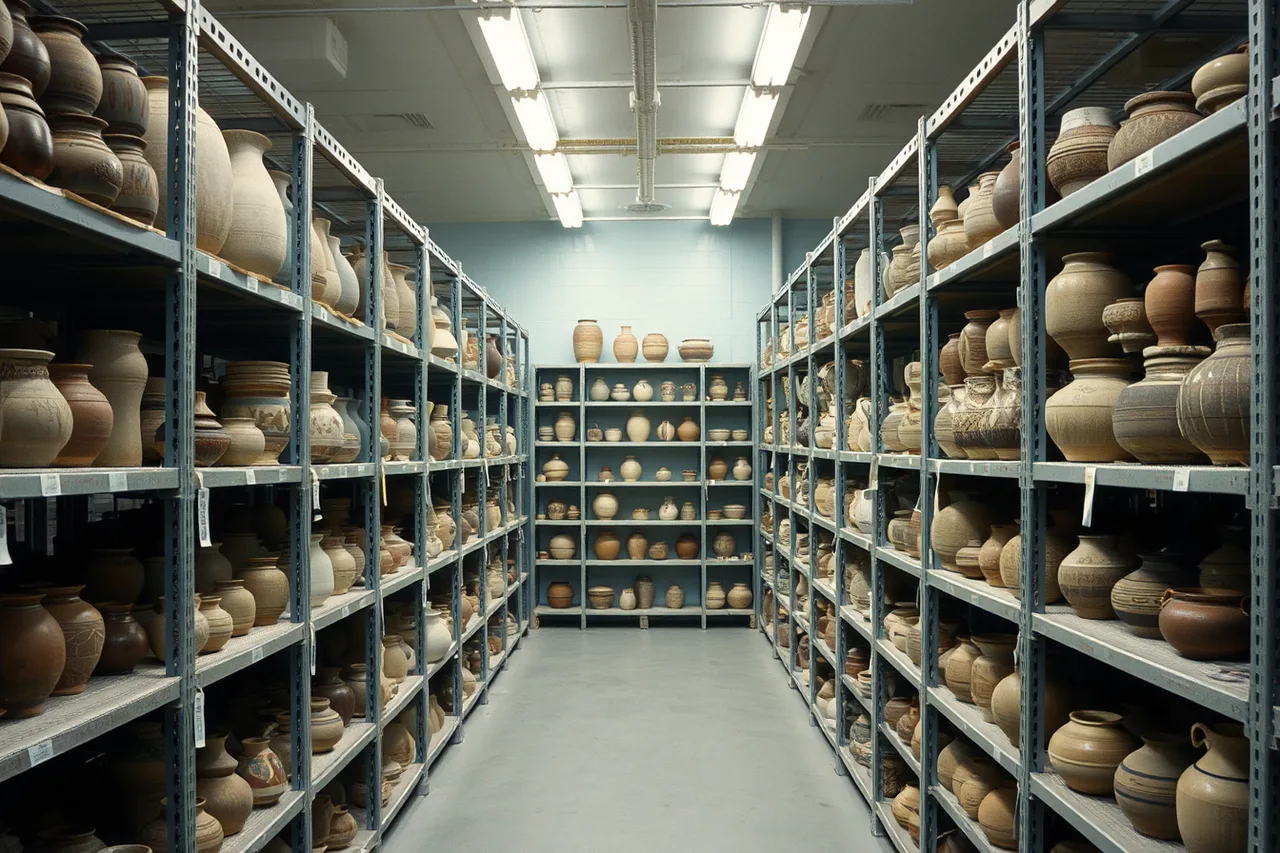
Its collections run from a group of more than 250 objects to roughly 700 pieces in an MFA collection.
One holding covers the first half of the twentieth century. It has about 400 pieces of European and American dinnerware. The examples come from these countries:
- Germany
- England
- Belgium
- Czechoslovakia
- France
- the United States
Another holds close to 500 clay objects, some made as early as 2200 BCE.
An hour with material like that does more for your eye than a month of scrolling. It also tells you what to ask about a contemporary pot: how it was formed, how it was fired, what the surface is doing.
Where to look
| Source | What it surfaces |
|---|---|
| University gallery and museum exhibitions | Juried and selected work, with context |
| Artist residency listings | Makers early in a serious career |
| Community studio class rosters | Local teachers who are working potters |
| Regional craft councils and open studio weekends | Studios you can actually visit |
| Ceramics program alumni pages | Where a school's graduates ended up |
Several named sources do the heavy lifting. ResArtis and the Alliance of Artists Communities both keep searchable residency listings. The St. Croix Valley Pottery Tour in Minnesota opens a group of working potters' studios to the public once a year. NCECA — the National Council on Education for the Ceramic Arts — stages juried exhibitions around its annual conference, and the American Craft Council's juried shows put ceramics alongside furniture and fiber.
Closer to the working-studio model are Pewabic Pottery in Detroit and Northern Clay Center in Minneapolis, both long-running ceramics organizations that combine a studio, classes and exhibitions. At the commercial end, East Fork in Asheville, North Carolina, and Heath Ceramics in Sausalito, California, sell dinnerware by the piece, so their clay, glaze and food-safety information is public — a benchmark to hold small studios to.
What to check once you find one
Ask what clay body and cone they work at, whether their functional glazes are tested, and how often they fire. A studio that answers those directly runs a real operation. One that talks only about aesthetics may still make beautiful work, but you learn nothing about the pots.
That same discipline is what a home setup needs, and it is why studio rules get written down in the first place.
Reading a studio's photographs honestly
Glaze colour reads false in most studio photos. A tenmoku that looks deep red on a phone screen is often brown in daylight, and a celadon photographed under warm bulbs goes grey-green.
Ask for a photo in daylight, or better, ask to hold the pot. If a studio posts only styled shots, you cannot tell a tested food-safe glaze from an untested one.
What a visit tells you that a website cannot
Walk in during a class and watch where the dust settles. Silica dust control, ventilation and settling sinks are the difference between a studio that lasts and one that gets shut down.
Ask who handles glaze waste and how. Ask whether greenware is covered against a dry winter, which matters anywhere with forced-air heat.
None of this is a judgement on the pots. It is how you tell whether the person teaching you will still be teaching in five years.
Common questions
Why not just publish a list of good studios?
Because a list of names on its own only tells you who markets best. The named sources above — residency listings, the pottery tour, the centers that show ceramics — point you at studios someone else has already selected, and the four questions in this guide tell you what to look for once you get through the door.
Is a studio with a big following better?
Not necessarily. Following tracks photography and posting frequency far more closely than it tracks making.
How do I find local studios?
Start with community college continuing education, municipal arts centers and regional craft councils. Open studio weekends are the fastest way to see several in a day.
What should I ask a maker whose work I like?
What clay, what cone, what glaze, and whether the piece is intended for food. Those four questions are polite, specific, and tell you almost everything.
In this guide
- How a ceramic residency works: K-State's terms in detailHow a ceramic residency works, from K-State's published terms to CCA's looser model, and what the trade teaches independent ceramic studios and home potters.
- How to prepare pottery for display: labels, handling, finishing and photosHow an independent ceramic studio prepares pots for display: finish feet and rims, label and document pieces, pack them safely, set them up, and photograph batches consistently.
- Independent ceramic studios reviews: questions to askIndependent ceramic studios reviews: ask about firing, clay, glaze records and vitrification, then check care details before buying handmade pottery.
- Beginner project: four questions for a studio visitA beginner project for a studio visit: four questions to ask, why the last two matter most, what to bring, and how to turn one idea into a change at home.
- Independent ceramic studios storage guide for home pottersIndependent ceramic studios storage guide: separate dry powders, wet materials and finished work, label containers, and organize shelves by use.