Reviews
Part of Home pottery: dust, glaze, and kiln considerations
Plaster earns a place in a home pottery studio that wood and canvas cannot
What each pottery work surface actually does, why canvas is a dust problem, and how to choose a table when no product test exists to lean on.
A work surface in pottery is not furniture. It decides how fast clay stiffens, how much dust the room makes, and whether slabs come off flat. Most home setups buy a wheel before deciding what the clay will sit on.
What to take away
- Plaster is the only common surface that pulls water out of clay, which is why it does wedging and reclaim work nothing else can.
- Canvas holds dry clay in its weave and releases it as airborne dust every time you shake or roll on it.
- A plaster chip embedded in a pot will pop the wall off during firing, so plaster and wet clay need separate zones.
- Wet-wipe every surface at the end of a session, before it dries.
Why no ranked list appears here
No table or slab roller was bought and tested for this article, so there is no ranked list, no scoring and no winner. What follows is what each material does, based on practices teaching studios publish for their own equipment.
The right surface for someone throwing mugs is not the right surface for someone rolling tile. A ranking would hide that.
Plaster does work nothing else can
Plaster absorbs water. Wedge on it and it stiffens clay as you work; spread reclaim slop on it and it drains a bucket of slurry back into throwable clay. University programs keep a plaster table and a bat rack for exactly this.
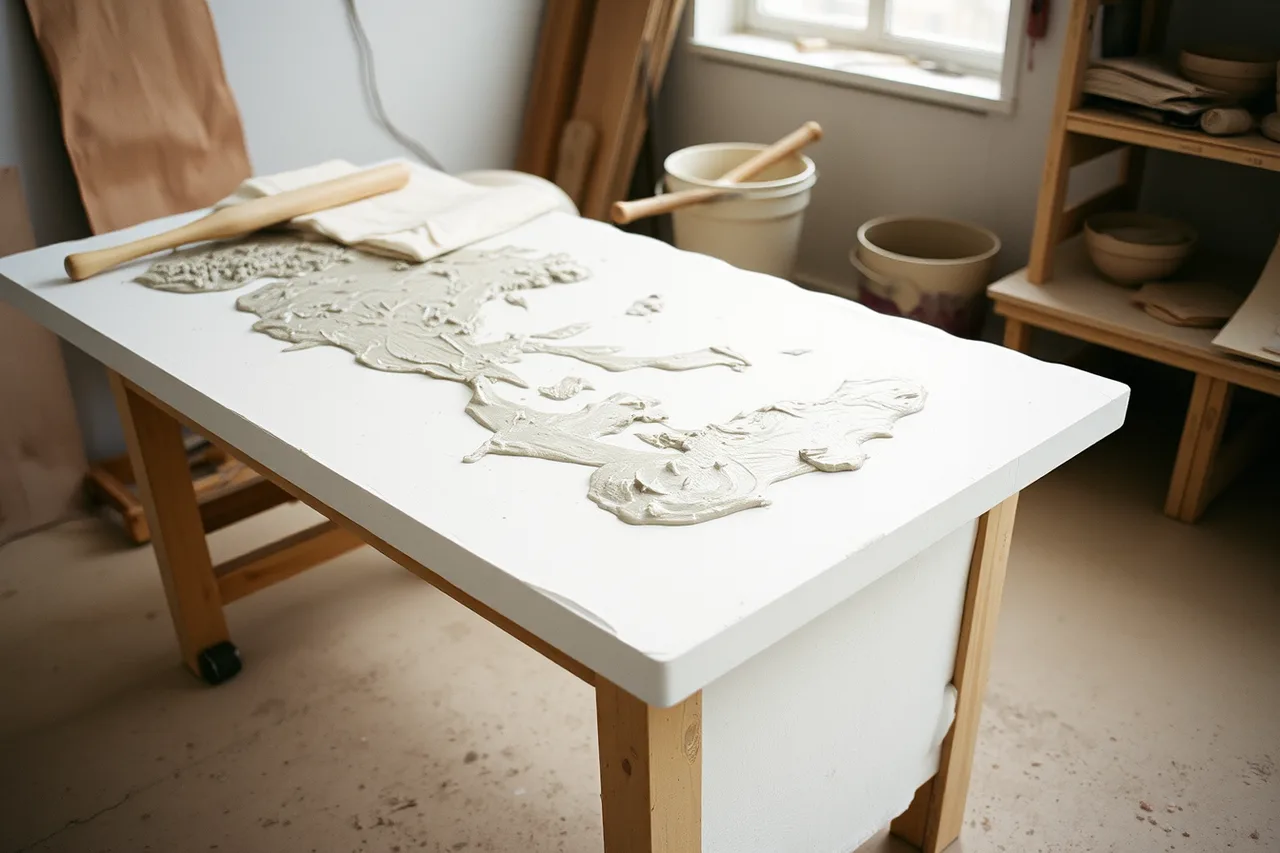
Plaster also carries one failure mode that ruins finished pots. A chip of plaster mixed into clay absorbs water after firing, expands, and blows a crater out of the pot wall weeks later.
Studio rules are blunt: do not mix plaster and clay, keep plaster work in its own area, and clean plaster and wooden bats before stacking them. Never let plaster go down a drain, where it sets solid in the trap.
Canvas is a dust problem, not a work surface
Canvas gets recommended because clay does not stick to it. What nobody mentions is where the dry clay goes. It works into the weave, dries, and comes back out as respirable dust the moment the cloth is shaken or rolled on.
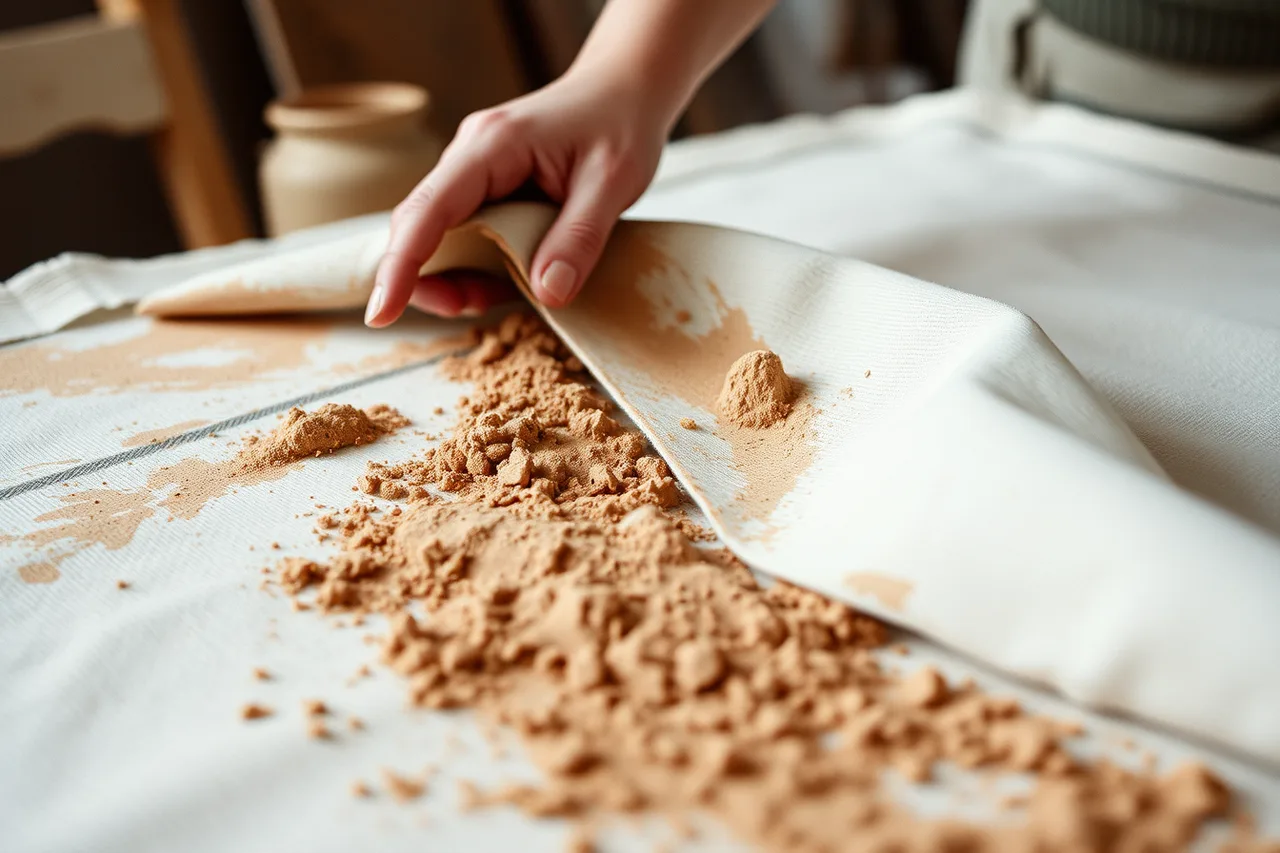
Studio guidance is consistent that the way to control clay dust is to finish greenware while it is still damp and wet-mop rather than let scraps dry and pulverize. Canvas works against both. If you use it, use it wet, keep it small enough to launder, and never shake it out indoors.
Choosing by what you actually make
Good for
- Plaster slab or table
- Wedging, reclaim, drying slabs evenly
- Sealed hardwood or ply
- Wareboards, bats, general assembly
- Nonporous laminate or glass
- Slab rolling, sgraffito, decorating
- Cement board
- A heat-tolerant surface near the kiln
Watch for
- Plaster slab or table
- Chips in the clay; keep away from wet work
- Sealed hardwood or ply
- Warping if stored wet; seal both faces
- Nonporous laminate or glass
- Clay sticks; needs a release or damp cloth
- Cement board
- Heavy; dusty if cut indoors
Match the surface to the operation, not to the room. Most home potters end up with two: one plaster station and one sealed board that moves.
Common questions
Can I pour my own plaster table?
Yes. Mix by weight in a clean container, pour into a sealed form, and never rinse plaster into a sink. Once cured and fully dry it works the same as a bought slab.
Is a canvas-covered board ever the right answer?
For occasional hand building with soft clay it is workable if you keep it damp and wash it. For daily use, a sealed board or plaster is cleaner and easier to control.
What does a bat actually need to do?
Hold a pot flat, release it without warping, and survive being wet. Plaster, sealed ply and plastic all manage that, and the differences matter mainly on large forms.
How often should I wet-wipe the table?
At the end of every session, while the residue is still damp. Once clay dries on a surface, cleaning it becomes a dust-raising operation instead of a wiping one. A tidy small studio is mostly this one habit, and it also protects the wider safety plan a home setup depends on.