Industry
Part of Home pottery: dust, glaze, and kiln considerations
Home pottery makers: craft-artist job data and the equipment gap
Home pottery makers: what BLS data on craft and fine artists and the RISD ceramics equipment list say about working in clay outside an institution.
No potters were interviewed for this article. What follows for home pottery makers is drawn from the U.S. Bureau of Labor Statistics' Occupational Outlook Handbook profile of craft and fine artists, the broader occupation potters fall under, and from the equipment list the Rhode Island School of Design publishes for its ceramics department, which together describe the gap a home maker has to close.
What to take away
- Craft and fine art is a small occupation with flat demand, so most people in clay hold other income alongside it.
- A teaching studio's advantage is shared capital equipment, not skill or space.
- The equipment a home studio cannot own is the equipment worth renting or borrowing.
- Firing capacity, not throwing skill, is what usually limits output at home.
What the occupational data shows
The Bureau of Labor Statistics' Occupational Outlook Handbook count of craft and fine artists puts the occupation at about 53,400 jobs in 2025. It does not break out potters, so read it as the wider craft-artist picture. Median pay is $55,290 a year, and employment is projected to fall about one percent through 2035.
Roughly 4,300 openings a year are expected, all from people leaving rather than growth. Entry runs on long-term on-the-job training; a bachelor's degree is common but not a gate.
The occupation is small and static, so almost everyone works to a mixed income of sales, teaching, commissions, and unrelated work.
The official description of the work environment says many artists work in studios in office buildings, warehouses, or lofts. Others work in private studios in their homes, and some share space. Home practice is not a lesser version of the work. It is one of its normal forms.
The gap between a teaching studio and a spare room
The difference is capital equipment. The Rhode Island School of Design's published inventory of its ceramics facility lists gas car kilns (57 and 88 cubic feet), a 24-cubic-foot programmable electric kiln, and four electric test kilns.
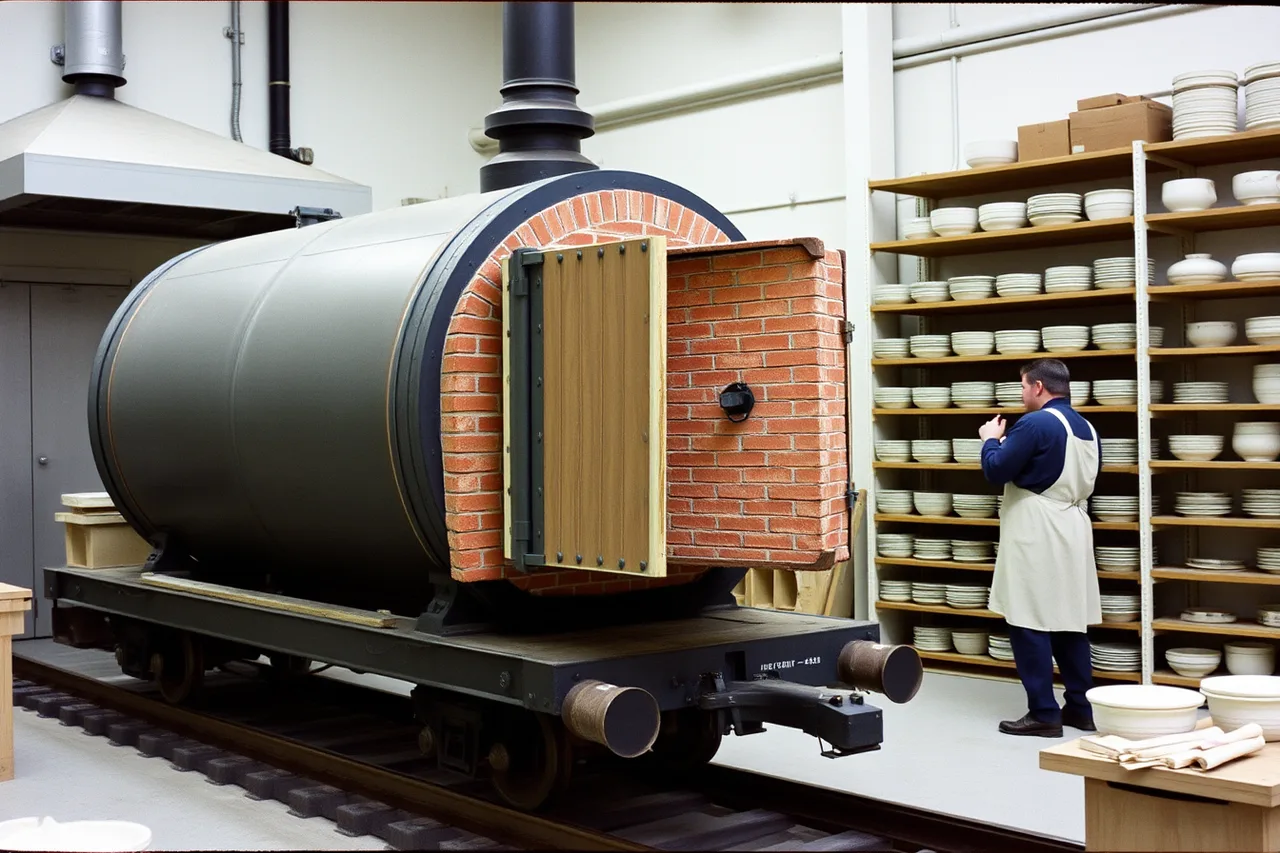
It also lists a pug mill with vacuum de-airing chamber, a 30-gallon pneumatic blunger, a ball mill, a two-station spray booth, and an air filtration system.
None of that is out of reach because it is advanced. It is out of reach because it is expensive, heavy, and needs three-phase power, gas supply or ducting. The skills those machines support can all be done by hand more slowly.
How makers close the gap
- Rent firing. Ask local suppliers and community studios whether they fire other people's work, and how they charge for it.
- Share a studio day. A membership one day a week buys access to the pug mill and the spray booth without owning either.
- Buy the small version. A test kiln does glaze tests; an extruder replaces a die press for handles and small forms.
- Change the work. Smaller pieces, fewer glazes and one clay body reduce what the equipment has to do.
What this means for a first year
Plan the year around firings rather than around making. Twenty pots that cannot be fired are not twenty pots. Decide early whether you are renting firing or installing a kiln, because that single choice sets your batch size, your drying space, your glaze range and most of your supply spending. Everything else in setting up a home studio follows from it.
Common questions
Is the declining job outlook a reason not to start?
No. The figure describes people employed as artists, not people who make pots. Most home potters are not counted in it at all, and demand for handmade functional ware does not track that series.
Do I need a degree to sell work?
No. The occupational profile lists long-term on-the-job training as the usual route and notes that artists improve through practice and repetition. Buyers ask about the work, not the transcript.
Is a shared studio cheaper than a home setup?
It depends on three local numbers: the membership rate, the price of the kiln you would buy, and the electrical work it needs. A kiln is a one-off cost and membership keeps recurring, so compare them over several years, not one, and make the decision explicitly rather than by drift.
How much space does a serious home practice need?
Less than people expect for making and more than they expect for drying and storage. Greenware needs undisturbed shelf space for days, and that is the constraint that bites first.