Maintenance
Part of Pottery studio failures: underfiring, crazing, and how handling breaks pots
Which studio mistakes does a well-planned small space prevent?
A small pottery room prevents mistakes by making the safe choice the easy one, from wet clay and labeled buckets to where the reclaim bin sits.
The best way to avoid studio mistakes in a small space is to remove the chance to make them. That means choosing materials that cannot become airborne and storing things so they cannot be confused.
What to take away
- Wet clay cannot go airborne, so it removes a hazard instead of managing one.
- A glaze label that does not say lead-free is treated as leaded until you confirm otherwise.
- The reclaim bucket, the mop and the labels have to live within arm's reach.
- Food, laundry and raw powdered glaze materials stay out of the room.
- Glaze waste goes to your household hazardous waste program, never down the drain.
Choose the materials before you choose the controls
Barnstable County, Massachusetts, runs a household hazardous products program for artists on Cape Cod, and it puts the order plainly. Plan the studio inventory first, so you can choose less toxic alternatives to supplies that could harm you, your family, your pets and the environment.
Hazard control sequence
- Choose less toxic alternatives first
- Use personal protective equipment
- Install ventilation systems
- Store by material type
- Use wet materials, not dry
- Clean up wet and cap containers
Where a less toxic material will not do the job, the fallbacks come in sequence. First protective equipment such as gloves and respirators, then ventilation that draws fumes away and out, then storage matched to the material type.
Then proper use, which in ceramics means wet materials rather than dry. Cleanup and disposal come last, including wet cleaning to keep dust down and caps kept on containers.
Every step down that list costs more and works less well than the step above it. A small studio feels this first, because there is nowhere for a bad habit to hide.
What substitution looks like in ceramics
Pratt Institute's Make Healthy an Art materials safety guide is specific. Use lead-free glazes. If a glaze label does not say lead-free or leadless, assume it contains lead until proven otherwise. Only use lead glazes on non-foodware.
Substitute safer ceramic materials
Avoid
- Glaze
- Lead glazes
- Low-fire flux
- Lead flux
- Colorants
- Toxic metal colorants
- Salt glazing
- Sodium chloride
Use instead
- Glaze
- Lead-free glazes
- Low-fire flux
- Alkali or alkaline earth fluxes
- Colorants
- Minimize toxic metal colorants
- Salt glazing
- Sodium carbonate
Lead swab test kits, such as 3M LeadCheck, turn pink where lead sits on a surface. Swab the dry, unfired glaze surface before firing. Swabs read the surface, not what a fired glaze can leach, so a negative result is not proof that foodware is safe.
If you need that answer, send the finished piece to a lab for leach testing.
Replace lead flux with alkali or alkaline earth fluxes for low-fire work. Prefer glazes fluxed with calcium, magnesium, potassium and sodium. Minimize toxic metal colorants.
For salt glazing, substitute sodium carbonate for sodium chloride. Have good dilution or local exhaust ventilation when applying solvent-containing glazes. Follow basic hygiene: no eating, drinking or smoking in the studio, gloves, separate work clothes, and washing hands afterward.
For brushing, dipping and pouring wet glaze, no airflow figure is needed. Those methods keep the glaze wet and put no dust in the air, so a number would have nothing to act on.
Spraying is the exception. Spray booths are commonly designed for a face velocity of about 100 linear feet per minute across the opening. Treat that as a typical design figure, not as a rule for a corner of a garage.
Arrange the room so the right thing is easiest
Arrange the room
| Item | Where it goes | Why |
|---|---|---|
| Reclaim bucket | Within arm's reach of the wheel, lidded | Scraps go in it instead of on the floor |
| Mop and bucket | Stored in the room | A mop in another building means sweeping instead |
| Containers | Labeled with contents and date, same handwriting | You can tell reclaim from fresh slip at a glance |
| Floor | Clear around each station | A mop reaches everywhere without moving anything |
| Shelves | One drying, one finished, neither shared with materials | Greenware and glaze buckets stop trading places |
A small studio fails when the correct action takes more effort than the wrong one. If the reclaim bucket is across the room, scraps end up on the floor. If the mop lives in another building, the floor gets swept.
What to keep out of the room entirely
Food and drink, unwashed laundry returning to the house, and raw powdered glaze materials unless you have ventilation designed for them.
Those three cover most exposure a small home studio creates, and dropping them costs nothing.
After those three, storage and access cause most of what is left. A separate guide covers the failure mechanisms worth knowing behind those failures.
Common questions
Is wet clay really safer than dry?
Yes, in the sense that matters: wet clay cannot become airborne. Almost every ceramics exposure control is a way of keeping the material wet or capturing it when it cannot be.
Do I need a separate room?
It helps, but a defined corner with clear boundaries and a cleaning routine works. What does not work is a bench that shares space with cooking or sleeping.
What about pets and children?
Keep them out while you work and after, until the room has been wet cleaned. Small hands and paws pick up settled dust more efficiently than anything else in the house.
How do I dispose of glaze waste?
Not down the drain. Keep a lidded bucket for glaze waste and work through five steps.
Dispose of glaze waste
- Let the solids settle for a day or more.
- Decant the clear water into a second container for reuse.
- Spread the settled solids on a tray and let them dry.
- Label the dried solids with the glaze name and the date.
- Drop them off at your household hazardous waste program or a local collection day.
Ask before you drop off. Programs differ on which metal colorants they take. Barium, cadmium, cobalt, lead and manganese colorants usually go to hazardous waste rather than the bin.
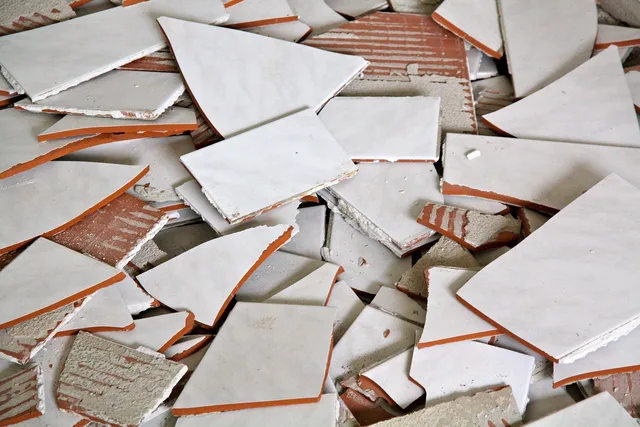
![These shards of broken pottery likely date to the Song Dynasty. They were prized for their rich blue and purple colors. The shards were collected and mounted to show off their coloration. This may have taken place at the end fo the 18th century during the Qianlong [Ch'ien-lung] emperor's reign. Why treat pottery losses as a line item in the supply budget?](/covers/how-to-price-supplies-for-pottery-studio-mistakes-640.webp?v=18803534)