Industry
Part of Home pottery budget: a per-firing method and two benchmarks
What one shared ceramics studio offers home pottery makers
Home pottery costs makers can track with batch records; one shared-studio example shows equipment, firing rules, and access requirements.
Home pottery makers rarely solve the cost problem by buying everything. They solve it by deciding what to own, what to rent and when the whole thing stops being a hobby in a legal sense. No makers were interviewed here; this is drawn from published studio terms and federal guidance.
What to take away
- The expensive part of a studio is capital equipment, and it is the part most easily shared.
- Community studio terms show the conditions of firing access and what comes with it.
- Once you sell regularly, whether the activity is a business or a hobby changes how it is taxed.
- Keeping records is both the tax answer and the cost-control answer.
Rent the expensive part
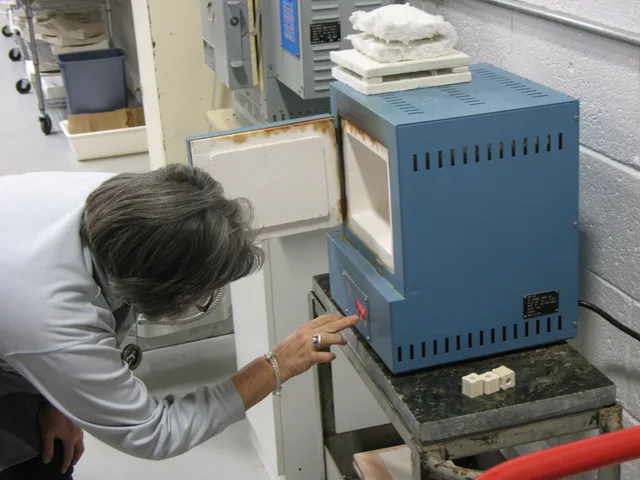
Shared studios follow a pattern: pay for access and training, buy your clay from them, fire on their schedule. UC San Diego Craft Center's ceramics studio terms show the shape. Members get stoneware and porcelain clays, tool kits, a slab roller, a pug mill, extruders, twenty wheels, electric bisque kilns and two cone 10 kilns.
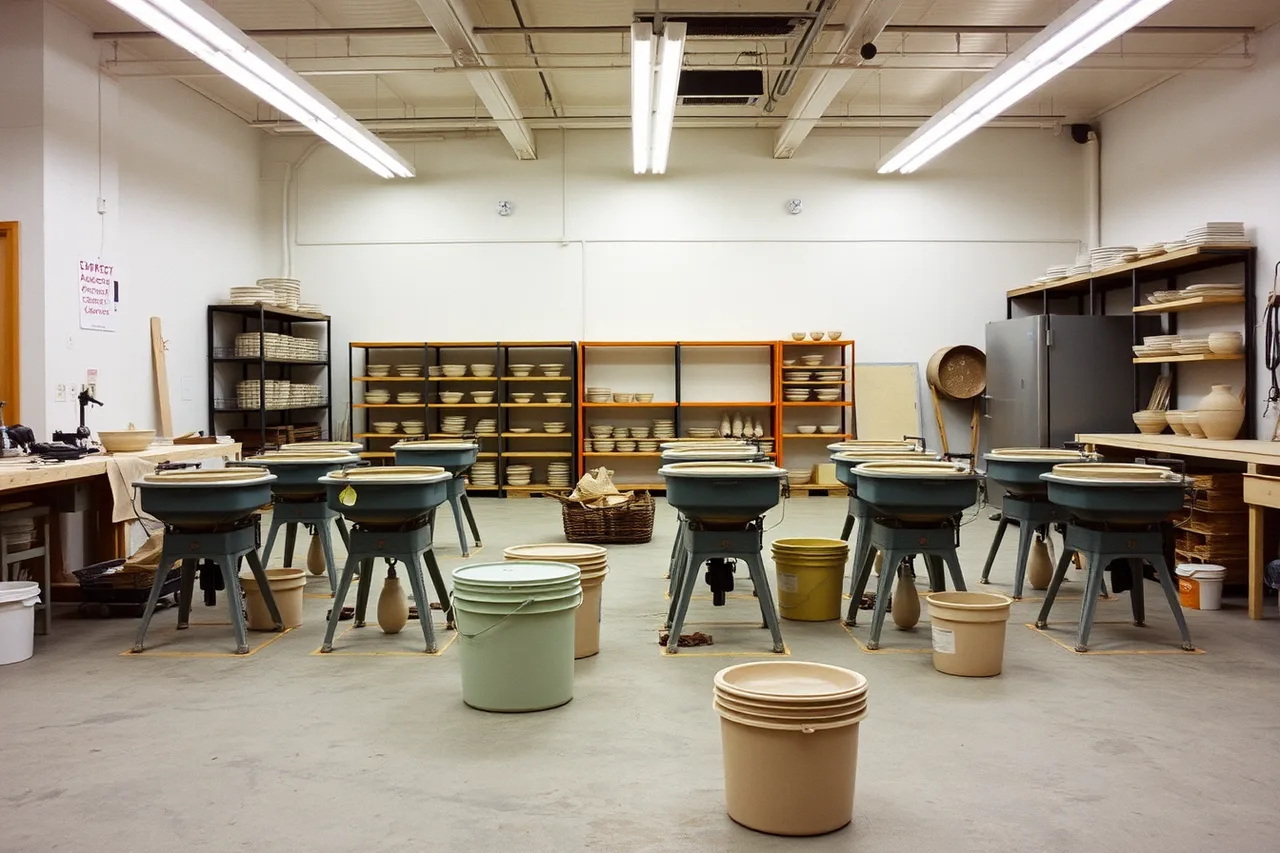
All clay must be bought from the center, and an Envirovent system must run for all electric firings. Anyone who wants to fire must take the kiln workshop and pass a safety test. They must then be present for the whole cycle or arrange for another trained person to be.
Read that as a price list for capability. For a home maker the useful question is which of those you would use weekly. Usually it is the kiln and nothing else.
Where the money actually goes at home
- Firing, whether you pay a studio or pay your utility.
- Clay, which is cheap per pound and expensive per year.
- Kiln consumablesshelves, wash, elements, thermocouples.
- Dust control, which is small but permanent.
- Lost work, which carries the full cost of everything above it.
The last one never makes it into a spreadsheet. A pot that cracks in the glaze firing has already consumed clay, glaze, two firings and your time.
What to own and what to rent
| Item | Own it when |
|---|---|
| Hand tools and buckets | Immediately; they cost almost nothing |
| Work surfaces and shelving | Immediately; you can make them |
| A wheel | You throw weekly and have somewhere to keep it |
| A kiln | Firing fees over a year approach its running cost |
| A pug mill or spray booth | Almost never, at home |
When the hobby becomes a business
Once you sell regularly, the tax treatment depends on whether the activity is carried on for profit, and that test has published criteria. The federal guidance (IRC §183 and IRS Publication 535) on telling a business from a hobby weighs whether the activity is run in a businesslike manner with complete and accurate books, and whether time and effort show an intent to profit.
It also asks whether you depend on the income, whether enjoyment is the main motive, and whether other income funds it. Losses that are normal for a startup, methods that change to improve profitability, and a profit in some years all count too.
No single factor decides it. The record-keeping that makes your costs visible also supports a business claim, so it is worth doing either way. This is not tax advice; anyone selling seriously should ask a professional.
Common questions
Is a shared studio membership cheaper than a home kiln?
For the first year or two, almost always, once electrical work is counted. After that it depends on how often you fire, so check your own per-firing cost.
Why do studios refuse outside clay?
Because they cannot verify what temperature an unknown body is rated for. One bag of low-fire clay in a cone 10 firing damages the kiln and everything in it.
Do I need to register a business to sell a few pots?
Selling occasionally does not by itself make an activity a business, but income is still income. Local licensing rules vary and are worth checking with your own jurisdiction.
What records are worth keeping?
Receipts, a firing log, and a simple sheet of what each batch cost and produced. That is enough to run the supply arithmetic and enough to answer questions later.