Guides
Part of Home pottery budget: a per-firing method and two benchmarks
Home pottery costs in a small space: what the budget actually covers
The cheap version of a safe home pottery space: what to spend real money on, what to improvise, and the one corner of the budget never to cut.
What to take away
- Fitting out a spare room to work safely costs about $150 to $400 if you improvise the small items, or $900 to $2,400 if you pay for the three things that cannot be improvised.
- Those three are a kiln vent and ducting at $350 to $950 installed, a fitted half-mask respirator at $40 to $90, and a HEPA vacuum at $300 to $800.
- Ventilation is the largest line in the room budget, and a box fan does not replace it.
- A kiln, a dedicated circuit, insurance and permits sit outside those totals.
The room total, and what sits outside it
Prices are typical US retail for 2026, before sales tax. Canadian buyers usually pay more once freight, duty and certification are added.
The room budget covers everything except firing. That split decides the number, because a kiln and its power supply often cost more than the rest of the studio combined.
Typical room total: $150 to $400 improvised, or $900 to $2,400 with a kiln vent, a fitted respirator and a HEPA vacuum. A small kiln and its circuit add roughly $1,000 to $5,000.
Two tiers, line by line
Improvised, typical cost
- Dust control
- Mop, bucket, sponges, $25 to $60
- Containment
- Lidded tubs, $8 to $20 each
- Breathing
- Disposable N95, $15 to $30 a box
- Ventilation
- Nothing that works
- Power
- Not improvable
Paid properly, typical cost
- Dust control
- HEPA vacuum, $300 to $800
- Containment
- Sealed shelving and dust covers, $80 to $250
- Breathing
- Fitted half-mask with P100 cartridges, $40 to $90
- Ventilation
- Kiln vent and ducting, $350 to $950
- Power
- Dedicated 240V circuit, $600 to $2,000
What decides it
- Dust control
- Silica dust settles, then gets kicked up again
- Containment
- Containment beats cleaning
- Breathing
- Fit decides protection, not the filter rating
- Ventilation
- Local exhaust at the source
- Power
- Kiln load, plus a permit
The short list worth improvising
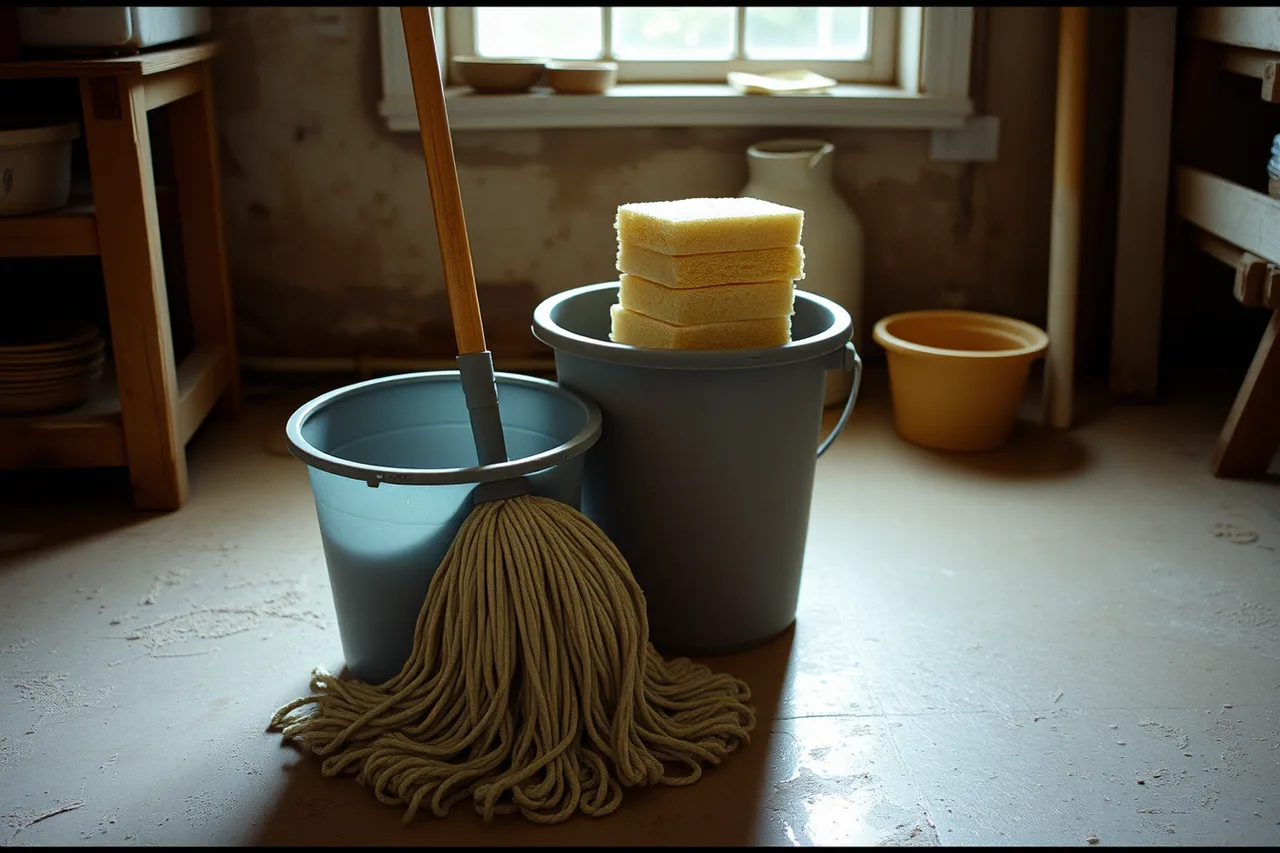
A mop, a bucket and a stack of sponges cost $25 to $60 and stay the main dust control in a small studio.
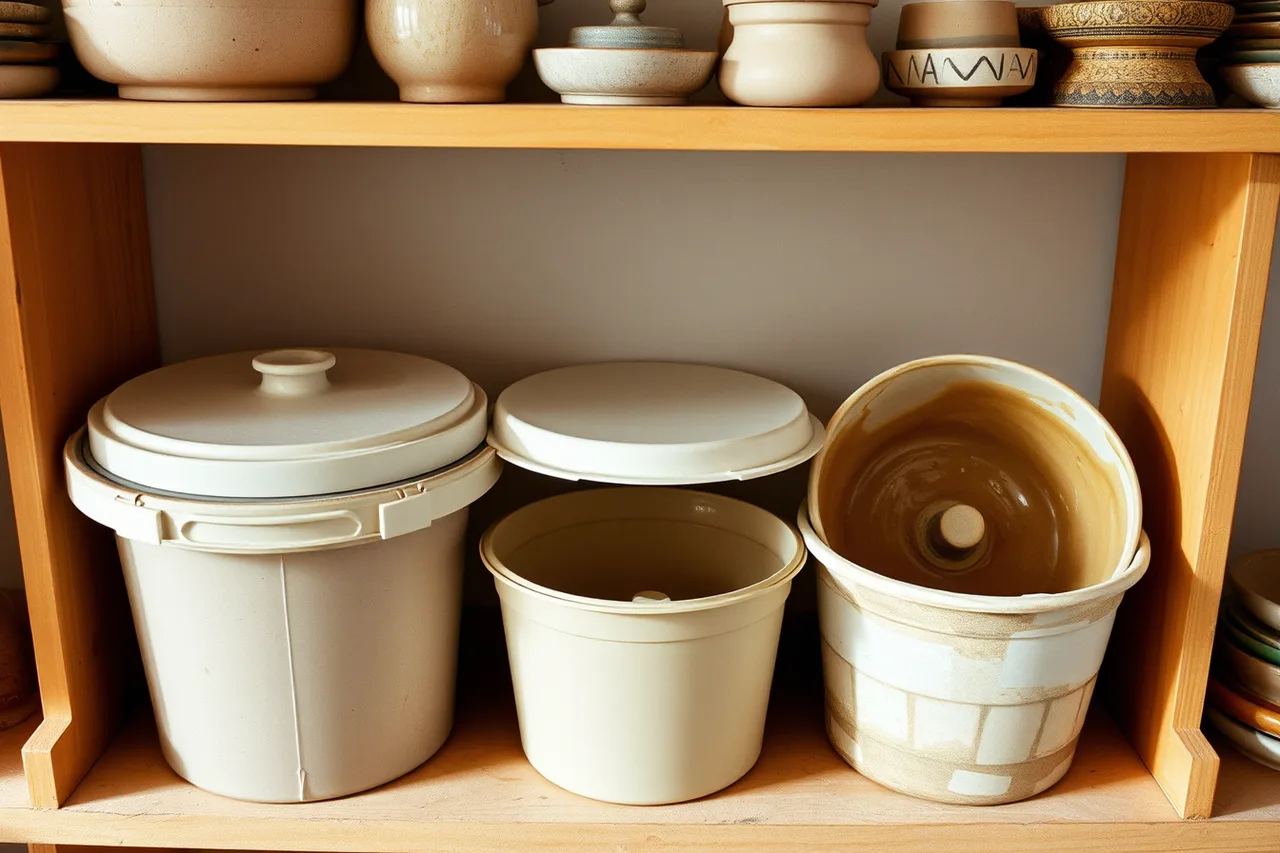
Lidded tubs run $8 to $20 each and keep clay, reclaim and glaze sealed, dated and out of the air. The thinking behind each container is set out in how to store clay and glaze in a home studio.
Scrap plywood shelving, wareboards and a plank work surface come to $0 to $150 if you own a saw. Written studio rules cost nothing at all.
Why the kiln vent is the biggest line
Dilution fails for ceramic hazards. A box fan pushes kiln fume through the room you are standing in. Local exhaust captures fume at or near the source instead.
The University of Tennessee calls that the preferred control when the hazard is serious, the dust or fume is heavy, or the source sits in your breathing zone. A kiln in a spare room meets all three tests.
A hood or downdraft vent sized to a small kiln typically costs $350 to $950 with ducting and a fan. A long run or a brick wall pushes that higher.
What the budget does not cover
Firing gear sits outside the room total, and the first year of making adds running costs that an equipment list hides. Both are covered in the home pottery budget checklist.
None of the lines below shrink because the room is small.
- The kiln itselfa used small kiln runs $400 to $1,200, a new one $1,200 to $3,000.
- A dedicated circuit$600 to $2,000 by a licensed electrician, plus a permit that often costs $50 to $200.
- Insurancea home policy may exclude kiln use, so a rider or small business policy is a separate premium.
- [Consumablesclay](/how-to-choose-materials-for-small-ceramics-projects) at $25 to $45 per 25 lb bag, glaze materials, kiln shelves and heating elements, all of which wear out.
- Disposalglaze waste and settled clay water cannot go down a household drain.
Permits and insurance are the two lines first-year potters forget, and both are cheap to check before the kiln is ordered.
Example: a spare-room budget built in order
Buy in the order below, because the safety items have to arrive before the fun ones. The sequence follows the buying order for home pottery gear.
A spare-room budget built in order
- Cleaning and containmentmop, bucket, sponges and four lidded tubs, $80 to $180.
- Breathing protectiona fitted half-mask with P100 cartridges, $40 to $90, plus cartridges at $10 to $20 each.
- HEPA vacuum$300 to $800 new, or $60 to $150 for a HEPA filter on a vacuum you own.
- Kiln vent and ducting$350 to $950 installed.
- Electricala dedicated circuit at $600 to $2,000, finished before the kiln arrives.
Total: $1,370 to $3,940. Fire at a community studio instead and the room drops to $150 to $400.